Buying a Costa Mesa Home With Galvanized Pipes: What to Check Before You Close

Many Costa Mesa homes from the 1950s and 1960s still have some galvanized steel water pipe. Here is how buyers can spot it and what questions to ask during escrow.
Costa Mesa has a large share of homes built in the 1950s and 1960s, and many of them were plumbed with galvanized steel water pipe. Some have been fully updated, some partly, and some still run on the original lines. If you are buying, the condition of Costa Mesa galvanized pipes can affect your plans for the house and your first few years of ownership. This guide explains how to identify galvanized pipes in Costa Mesa homes and what to ask before escrow closes.
What galvanized pipe is
Galvanized pipe is steel coated with zinc to slow rust. It was widely used for household water lines before copper became common. Over decades, the zinc wears away and the steel inside begins to corrode. Rust and mineral scale build up on the inner walls, which narrows the opening and reduces flow. Threaded joints are thinner than the rest of the pipe and are often where leaks start.
The decline is gradual, which is why it is easy to miss. A family can get used to weak showers and slow-filling tubs for years. Corrosion also does not happen evenly. Hot water lines often wear faster than cold lines, and sections near the water heater or in damp areas may be in worse shape than the rest of the system.
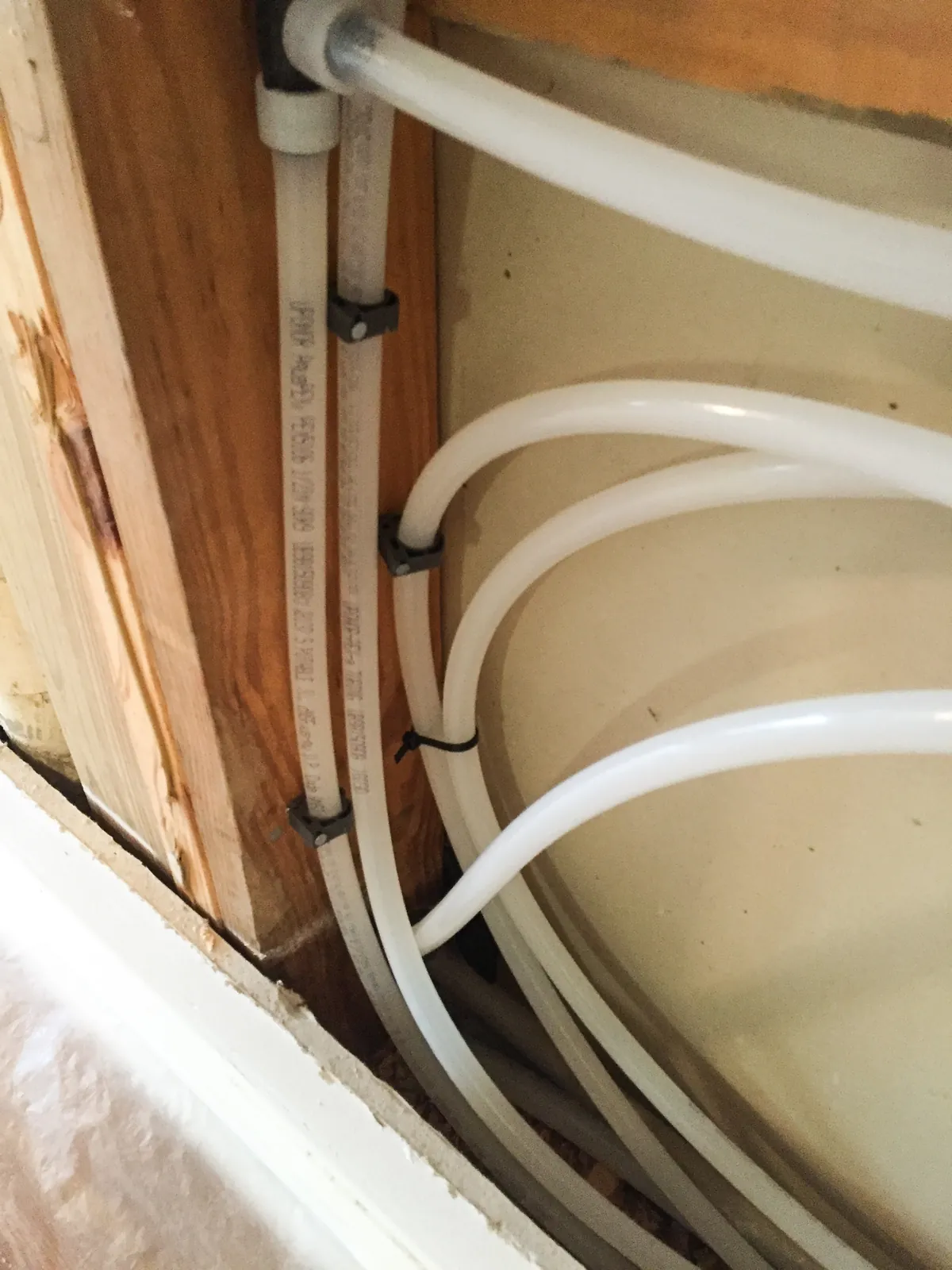
How to spot it during a showing
You do not need tools to get a first impression:
- Look at the pipes coming out of the wall under sinks and behind the toilet. Galvanized pipe is dull gray and has threaded fittings.
- Check the water heater connections and the main line where it enters the house, often near the front hose bib or in the garage.
- Scratch lightly with a key. Galvanized steel stays silver-gray, while copper shows a penny color.
- A magnet sticks firmly to galvanized steel but not to copper or plastic.
Keep in mind that a house can have new copper or PEX at the visible stubs and older galvanized pipe hidden inside the walls. Partial updates are common in older homes.
Warning signs that point to aging pipes
Run the faucets during your visit. Low flow at several fixtures, especially upstairs or at the far end of the house, is a classic sign of narrowed galvanized lines. Brown or rusty water when a tap first opens, a metallic taste, and repeated leak repairs listed in the disclosures are also worth noting. Look for patched drywall near bathrooms and stains on ceilings below plumbing.
Galvanized pipes in Costa Mesa: questions for the seller
Disclosures are a good starting point, but direct questions help:
- Has the home been fully or partly repiped, and when?
- Were permits pulled for that work?
- Have there been leaks, and where were they repaired?
- Is the main line from the meter to the house original?
Older galvanized service lines have also drawn attention because some were connected to lead components in the past. Your water utility may have information on service line materials for your address. It is also fair to ask whether the seller has any invoices, warranties or photos from past plumbing work, since those records show what was replaced and what was left in place.
What a plumbing inspection adds
A general home inspection often notes galvanized pipe but may not judge its condition in depth. A dedicated plumbing inspection by a licensed plumber can include a water pressure check, a flow test at several fixtures and a closer look at the visible piping. Some buyers also schedule a camera inspection of the sewer line, which is a separate system from the water supply. The results can help you plan, budget and negotiate with clear facts rather than guesses.
Planning after you buy
If galvanized pipe remains, decide whether you will address it right away or after you move in. Replacing supply lines is easier before furniture and new flooring arrive, and it pairs well with kitchen or bathroom remodels. In neighborhoods such as Mesa Verde, Eastside and College Park, many owners plan the plumbing first and the finishes second for exactly that reason. A clear look at Costa Mesa galvanized pipes during escrow gives you time to plan instead of reacting to the first leak.
Quick takeaways
- Galvanized pipe is gray steel with threaded joints, and a magnet sticks to it.
- Low flow and rusty water at several fixtures are common warning signs.
- Ask about past repiping, permits and leak repairs before closing.
- A plumbing inspection gives you facts for planning and negotiation.
Related reading
On this site, see lead risks in galvanized pipe and cast iron versus galvanized pipe. Neighbors can visit Newport Beach, Irvine and Tustin, or browse every city at repipeinc.com.
Questions about galvanized pipes in Costa Mesa?
Request a free quote and talk with a licensed C-36 plumbing contractor about the water piping in the home you are buying. Get my free quote. Our AI system alerts a technician instantly, so you get a fast callback.
Repipe OC, 23821 Hillhurst Drive, Laguna Niguel, CA 92677, (949) 524-2362, CSLB #1087885 C-36.
Repipe OC near you
Not in Costa Mesa? The same crew serves nearby cities. See the Repipe OC hub (repipeinc.com), or jump to a neighboring city:
 Written by Repipe OC · CSLB #1087885 C-36 · 23821 Hillhurst Drive, Laguna Niguel, CA 92677 · (949) 524-2362