Upgrading to Tankless in Costa Mesa's 1960s to 1980s Homes
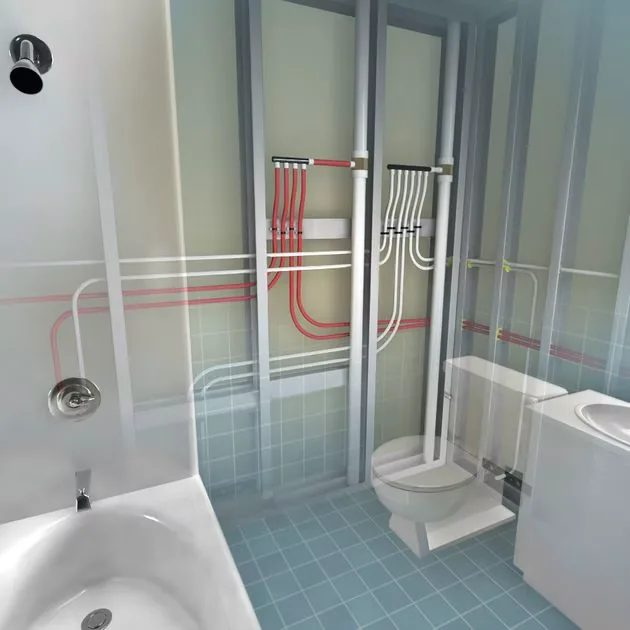
Eastside, Westside, and Bayview homes: what older construction means for a tankless water heater installation in Costa Mesa.
Costa Mesa has plenty of homes from the 1960s through the 1980s, and many still have their original gas service and supply pipes. That age is the main thing that shapes a tankless water heater installation here.
We look at the gas line, the vent route, and the pipes before recommending a unit, then follow the installation process described below.
Local factors in Costa Mesa
Eastside and Westside tracts were built for tank heaters, and their gas branches are often too small for a whole-home tankless unit without an upgrade. Electric tankless can look tempting, but many panels in homes this age cannot support a whole-house electric model.
Mesa Water's hard water also builds scale in both pipes and heat exchangers. If your home still has early copper or galvanized lines, we will tell you whether a repipe should come first or alongside the heater.

What a complete tankless water heater installation includes
A proper tankless water heater installation is more than trading a tall tank for a box on the wall. Your written scope should list:
- Load sizing from bathroom count and simultaneous use, not square footage
- Removal and disposal of the old tank, if there is one
- A mounting spot that meets clearance rules and any HOA exterior rules
- Gas line verification or upsizing, or dedicated circuits for electric units
- Approved venting with correct termination clearances
- Isolation valves and service ports for future descaling
- A condensate drain or pump where the unit needs one
- Permit, inspection, startup, and a homeowner walkthrough
A bid that skips gas verification or the permit is not a complete job.
Sizing mistakes to avoid
Undersizing shows up as a temperature drop when two showers run at once. Oversizing costs more up front and can cycle poorly at low flow if the modulation range is a bad match. A simple usage map helps: morning routines, guest baths, laundry overlap, and kitchen demand. We turn that into the flow rate and temperature rise the heater actually needs.
Hard water and descaling in Costa Mesa
Scale is the main long-term enemy of a tankless heater here. Plan on periodic descaling; with isolation valves already on the unit, the flush is a short visit. We won't pitch a water softener as a fix for pipe problems, though optional filtration is a fine side conversation.
Pipe condition and the new heater
Hanging a new tankless heater on pinholing copper, restricted galvanized, or polybutylene is backwards. You gain efficiency at the heater and keep the leak risk in the walls. If a whole-house repipe is already on the list, doing both together shares access, crew mobilization, and permit timing, and lets us set the heater location before new PEX-A lines are routed.
How installation day usually runs
- Protect floors and confirm shutoffs
- Drain down and disconnect the old heater safely
- Rough in fuel and vent before the new unit goes up
- Make water connections with isolation and service valves
- Commission the unit: ignition, steady temperature, leak-free joints
- Coordinate the inspection with the city
- Walk through screens, setpoints, and the maintenance interval with you
Choosing a fuel type
Most whole-house tankless projects around Orange County end up gas-fired. The catch is supply: the heater has to receive enough gas volume, and older homes often have a branch line from the meter that is too small. A compliant vent route is the other requirement.
Electric whole-home models exist, but their current draw is heavy enough that plenty of panels would need a service upgrade first. Where electric does shine is a compact point-of-use unit for a remote half bath, which is a separate product, not a whole-home substitute.
The paperwork side in Costa Mesa
Swapping a gas appliance is not a no-permit job. The work is permitted and inspected, the installer should carry a CSLB license (Repipe OC's is #1087885), and warranty terms for both labor and equipment belong in writing. Walk away from a bid that skips the permit.
Questions Costa Mesa homeowners ask
Is "endless hot water" real? Within the unit's flow rating, yes. Open enough high-demand fixtures at once and you can exceed it, so sizing is the safeguard.
How many days will this take? A simple swap usually wraps in one to two days after parts and permit are in hand. Gas or vent upsizing adds time; pairing with a whole-house PEX-A repipe puts it on the repipe timeline.
Next step for Costa Mesa homeowners
Call Repipe OC at (949) 524-2362 for a Costa Mesa tankless estimate that accounts for your home's age. https://repipesoc.com, CSLB #1087885. Repipe OC, 23821 Hillhurst Drive, Laguna Niguel, CA 92677.
Repipe OC near you
Not in Costa Mesa? The same crew serves nearby cities. See the Repipe OC hub (repipeinc.com), or jump to a neighboring city:
 Written by Repipe OC · CSLB #1087885 C-36 · 23821 Hillhurst Drive, Laguna Niguel, CA 92677 · (949) 524-2362